The US Higher Education Commission on Accreditation maintains one of the most extensive databases of accredited traditional and non-traditional education providers across all 52 U.S. states. Every institution within this network has undergone a rigorous and comprehensive review process to earn full accreditation. When international students pursue education at American institutions, particularly through non-traditional or distance-learning pathways, the process of validating and authenticating their foreign academic credentials becomes essential and must align with the standards of both countries involved.
Equivalency is the primary requirement when assessing whether foreign academic credentials are comparable to U.S. academic standards. This evaluation involves multiple layers of document verification, institutional recognition, and curriculum assessment. For any qualification to be considered for equivalency, the issuing institution must be listed in the database of the U.S. Higher Education Commissions or hold one of the six regional accreditations recognized by the U.S. Department of Education (USDE) and the Council for Higher Education Accreditation (CHEA):
Programs must meet the academic standards of the student’s home country and be recognized under (USHECA)’s accreditation framework. Additionally:
Documentation requirements vary depending on whether the applicant is seeking equivalency for an undergraduate, graduate, or postgraduate qualification. These documents typically include academic transcripts, institutional recognition letters, program descriptions, and any additional materials necessary for a complete verification process.

Applicants seeking undergraduate equivalency must submit the following documents to the US Higher Education Commission on Accreditation:
Licensure from the United States Distance Learning Association (USDLA)

Applicants applying for graduate-level equivalency must provide all undergraduate-required documents, along with additional materials, including:
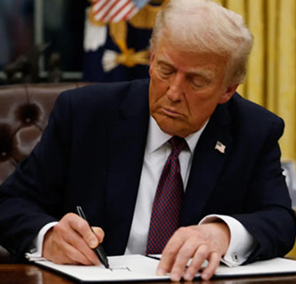 January 31, 2025
Accreditors Brace for Trump’s Promised Higher Ed Shakeup...
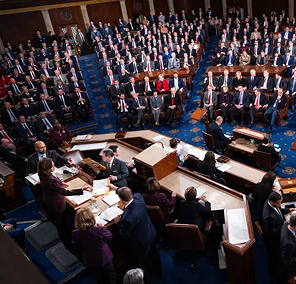 January 20, 2025
The Senate Committee on Health, Education, Labor, and Pensions (HELP)...
 September 25, 2024
US Higher Education Commission on Accreditation Advocacy in Action...
Disclaimer
All logos, names, and graphics of (USHECA) and its offerings are trademarks of (USHECA). All other company names, brands, trademarks, and logos referenced on this site are the property of their respective owners. Their use does not imply any endorsement, sponsorship, or recommendation by, or of, (USHECA).
Copyright © 2026 US Higher Education Commission on Accreditation, All Rights Reserved.
